Get Quotes
 LANG
LANG
Table of Contents
- Introduction: The Enduring Role of 18650 Cylindrical Cells in Modern Energy Storage
- Core Technical Fundamentals: What Defines a Modern 18650 Lithium-Ion Cell
- Application Adaptability: Where 18650 Cells Outperform Alternative Formats
- Inherent Limitations: What Industry Professionals Need to Plan For
- Technical Parameter Comparison: 18650 vs. Competing Cell Formats
- Current Compliance and Safety Requirements for Professional Use
- Conclusion: Is 18650 the Right Choice for Your Application?
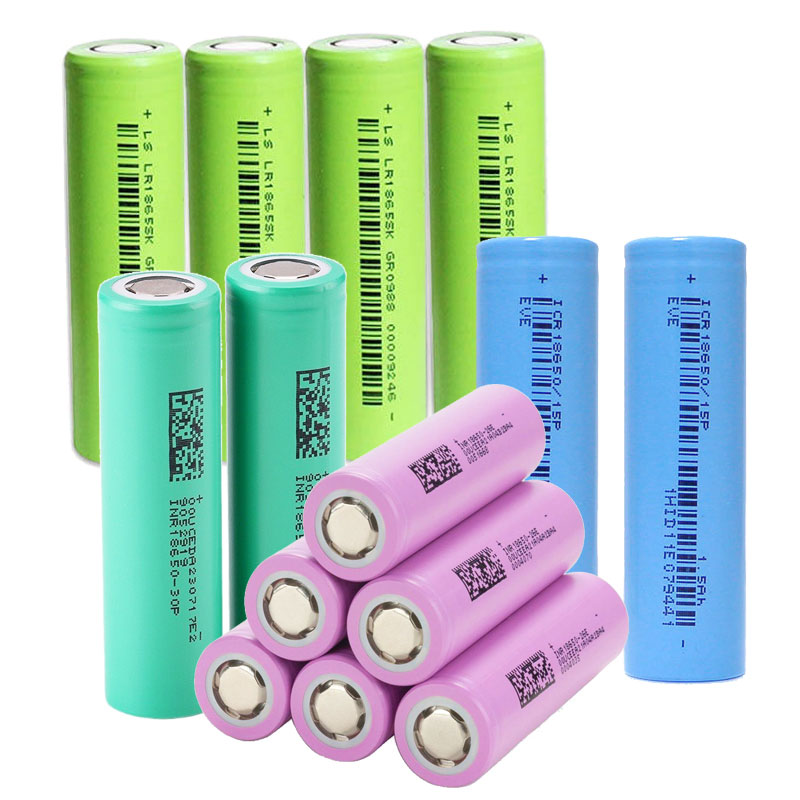
How much do you know about 18650 lithium-ion batteries?
18650 Lithium-Ion Batteries: An In-Depth Analysis of Advantages, Disadvantages and Key Practical Considerations for Industry Professionals
Introduction: The Enduring Role of 18650 Cylindrical Cells in Modern Energy Storage
Since its commercial introduction in the early 1990s, the 18650 lithium-ion cylindrical cell—named for its standard dimensions of 18mm diameter and 65mm length—has remained one of the most widely used battery formats in industrial and consumer applications. For decades, it has served as the benchmark for performance, reliability, and scale in portable energy storage, powering everything from early laptop batteries to the first mass-produced electric vehicles. Even with the rise of newer formats like 21700 and 4680 cells, the 18650 retains its market share in a wide range of specialized use cases, valued for its mature supply chain, consistent performance, and well-understood manufacturing processes.
For industry professionals navigating battery selection for new product development, energy storage systems, or OEM integration, understanding the nuanced strengths and limitations of 18650 technology is critical. Unlike generalized consumer content that only scratches the surface, this analysis breaks down the technical advantages, inherent drawbacks, application-specific tradeoffs, and current compliance requirements that impact decision-making. Our goal is to deliver a structured, actionable overview that differs from generic summaries, helping engineering, procurement, and product teams make informed choices that align with performance, safety, and cost targets.
Core Technical Fundamentals: What Defines a Modern 18650 Lithium-Ion Cell
Before evaluating advantages and disadvantages, it is important to ground discussion in the current technical baseline of 18650 cells. Today’s 18650 cells are far more capable than early iterations, with leading manufacturers delivering nominal capacities ranging from 2000mAh for high-drain power cells up to 3600mAh for energy-focused applications. Nominal voltage sits consistently between 3.6V and 3.7V, with a full charge cut-off of 4.2V and typical discharge cut-off of 2.5V, matching the standard lithium-ion chemistry platform that has been refined over 30 years of production.
Cells are broadly categorized into two product families for professional use: protected and unprotected 18650s. Protected 18650 cells integrate a small printed circuit board (PCB) on the negative terminal of the cell, which provides built-in safety mechanisms to prevent overcharging, over-discharging, over-current draw, and short-circuiting. This format is the standard for off-the-shelf consumer replacement and low-volume integration, where end-users may handle cells directly. Unprotected 18650 cells omit this on-cell protection circuitry, resulting in a slightly smaller footprint, lower per-unit cost, and the ability to support higher continuous discharge currents (up to 30A+ for high-power chemistries). These cells are designed exclusively for integration into larger battery packs that include a centralized battery management system (BMS) to handle protection functions, making them the choice for electric vehicles, grid energy storage, and high-power industrial equipment.
Application Adaptability: Where 18650 Cells Outperform Alternative Formats
The enduring popularity of 18650 cells stems from a unique combination of attributes that make them well-suited for a broad range of professional use cases. To understand their advantages, it is useful to compare performance and practicality against competing formats: prismatic lithium-ion, pouch polymer cells, and newer cylindrical formats like 21700.
Key Advantages of 18650 Lithium-Ion Cells
1. Mature, Scalable Supply Chain with Consistent Quality Control
One of the most underappreciated advantages of 18650 technology is the maturity of its global manufacturing ecosystem. Unlike newer cell formats that still face yield and supply consistency challenges, 18650 production lines have been optimized for decades, with leading Asian manufacturers producing millions of cells per month with highly consistent dimensional, capacity, and impedance tolerances. For industry professionals building products at mid to high volume, this means lower lead times, reduced qualification testing requirements, and the ability to source from multiple suppliers to mitigate supply chain risk. Quality consistency across cells is particularly critical when building large series-parallel battery packs, where cell mismatch leads to accelerated degradation and reduced pack lifespan. The 18650 format’s long history of standardized manufacturing delivers more consistent cell-to-cell performance than many newer or custom formats.
2. Proven Energy Density and Power Density Balance
Modern 18650 cells deliver an industry-leading balance of gravimetric and volumetric energy density for a mass-produced cylindrical cell. High-energy variants reach up to 270 Wh/kg and 650 Wh/L, which is sufficient for most portable and stationary applications. For high-drain applications like power tools and e-mobility, high-power 18650 cells can deliver continuous discharge rates of 10C to 15C while retaining respectable capacity, a balance that remains difficult to achieve in smaller custom pouch formats. This versatility means 18650 can be adapted across use cases from low-draw IoT sensor battery packs to high-performance e-bike powertrains without a complete redesign of the pack architecture.
3. Long Cycle Life and Predictable Degradation
Under standard operating conditions (25°C ambient temperature, 0.5C charge/discharge rate, 20-80% state of charge window), high-quality 18650 cells deliver 300 to 1000 full cycle equivalents before dropping to 80% of original capacity—far exceeding the performance of older chemistries like NiCd and NiMH. For stationary energy storage applications where cells operate within a moderate state of charge range, lifespans of 5 to 10 years are routinely achievable. Equally important is the predictable degradation profile of the chemistry: decades of field data have allowed manufacturers and system designers to accurately model capacity fade over the life of a pack, reducing the risk of unexpected performance issues after deployment. Unlike newer lithium-ion chemistries where long-term degradation data remains limited, 18650 performance over time is well understood, making it a low-risk choice for industrial applications with long service life requirements.
4. No Memory Effect and Flexible Charge Profiles
Like all modern lithium-ion chemistries, 18650 cells do not suffer from the memory effect that plagued older nickel-based chemistries. There is no requirement to fully discharge the cell before recharging to preserve capacity, allowing for flexible charge patterns that align with real-world use cases like intermittent renewable energy storage or variable daily device usage. This flexibility simplifies BMS programming and improves end-user convenience for portable applications.
5. Lower System Cost for Medium-Sized Packs
While per-kWh costs for 18650 are slightly higher than larger formats like 21700 at very high volume, for mid-volume applications and smaller battery packs, 18650 often delivers a lower total system cost. The standard form factor eliminates the need for custom tooling or custom cell development, reducing upfront NRE (non-recurring engineering) costs and shortening time to market. For OEMs launching new products with limited production runs, this upfront cost saving can outweigh marginal per-cell cost differences.
Common Industrial Applications That Leverage 18650 Strengths
These advantages make 18650 the preferred choice for a range of professional use cases:
Low to medium power e-mobility: Electric bicycles, scooters, mopeds, and small electric ATVs, where the balanced power/energy density and modular pack design fit well within frame size constraints.
Portable industrial and consumer power: High-performance flashlights, vaporizers, handheld testing equipment, portable power banks, and cordless power tools, where the compact standard size and high discharge capability are ideal.
Stationary energy storage: Residential and small commercial solar energy storage systems, backup power supplies, and off-grid energy systems, where the long cycle life and predictable performance reduce long-term risk.
Specialized automotive and aerospace: Auxiliary power packs, starting batteries, and low-power embedded systems, where the mature safety profile and small form factor simplify integration.
Even the original high-volume adoption of 18650 in the Tesla Model S and Model X demonstrates the format’s capability for large-scale applications, with packs containing thousands of matched 18650 cells delivering over 400 miles of range in early production vehicles.
Inherent Limitations: What Industry Professionals Need to Plan For
No battery format is universally ideal, and 18650 lithium-ion cells come with inherent drawbacks that must be accounted for during product design and system integration. Understanding these limitations upfront avoids costly redesigns and safety issues downstream.
Key Disadvantages of 18650 Lithium-Ion Cells
1. Inherent Thermal Runaway Risk
Like all high-energy-density lithium-ion chemistries, 18650 cells carry a risk of thermal runaway—a self-sustaining exothermic reaction that can lead to fire or explosion if the cell is damaged, overcharged, or exposed to high temperatures. The cylindrical steel casing of 18650 cells contains high internal pressure, meaning a failure can result in more forceful venting than pouch cells. This risk is manageable with proper design, but it requires careful attention to cell selection, protection circuitry, and pack thermal management. For applications where cells may be subject to puncture or impact damage, additional mechanical protection is required to mitigate risk.
2. Mandatory Protection Requirements
As a consequence of the thermal runaway risk, 18650 cells require active protection to operate safely. Unprotected cells rely on the pack-level BMS to provide overcharge, over-discharge, over-current, and thermal protection, adding cost and complexity to pack design. Even protected off-the-shelf cells only include basic on-cell protection, which is not sufficient for high-power or high-volume applications, requiring additional system-level safety features. Cutting corners on protection creates unacceptable safety risks and can lead to product liability issues for manufacturers.
3. Inflexible Fixed Dimensions
The defining feature of 18650 cells—their standardized 18x65mm form factor—is also one of their biggest limitations. Unlike custom pouch or prismatic cells, which can be manufactured in custom sizes to fit the available space in a product design, 18650 cells require designers to adapt their product packaging around a fixed grid of cylindrical cells. This often leads to unused dead space in a pack, reducing overall system-level volumetric energy density compared to a custom-sized cell format. For product developers working with tight space constraints in consumer electronics or automotive applications, this inflexibility can be a significant drawback.
4. Lower Energy Density at the System Level Compared to Larger Formats
While individual 18650 cells have good cell-level energy density, the need for multiple individual cells and additional mechanical packaging to hold them in place reduces overall system-level energy density. Larger cylindrical cells like 21700 or 4680 require fewer cells for the same total pack capacity, reducing the amount of steel casing and packaging material per kWh of energy, leading to higher system-level energy density. For applications where maximum range or capacity in a given footprint is the top priority, larger formats generally outperform 18650.
5. Lower Recycling Rates and Environmental Impact
While 18650 lithium-ion cells are technically recyclable, global recycling infrastructure for lithium-ion batteries remains underdeveloped, with only approximately 5% of all spent lithium-ion cells properly recycled in most regions. The small size and high volume of 18650 cells, particularly in consumer applications, makes collection and sorting more difficult than larger format cells from electric vehicles, leading to higher rates of improper disposal. This creates both environmental hazards and reputational risks for brands targeting environmentally conscious consumers. Even with improved recycling processes emerging, the environmental impact of 18650 remains higher than alternative chemistries or more easily recyclable formats for many use cases.
6. Higher Per-Unit Manufacturing Costs at Scale
At very high production volumes for large battery packs (such as those used in full-size passenger EVs), the 18650 format is less cost-effective than larger cells. Building a 100kWh pack with 18650 cells requires thousands of individual cells, connections, and assembly steps, compared to fewer than 100 larger 4680 cells. This increases total assembly and labor cost, even if per-cell costs are low. For this reason, most high-volume EV manufacturers have transitioned to larger cell formats to reduce pack-level production costs.
Technical Parameter Comparison: 18650 vs. Competing Cell Formats
To put the tradeoffs of 18650 in context, the table below summarizes a side-by-side technical comparison with the most common competing formats for professional applications:
| Parameter | 18650 Li-ion | 21700 Li-ion | Pouch Polymer Li-ion | NiMH |
Nominal Voltage | 3.6V – 3.7V | 3.6V – 3.7V | 3.6V – 3.7V | 1.2V |
Typical Cell Capacity | 2000mAh – 3600mAh | 3000mAh – 5000mAh | Custom up to 20Ah+ | 1000mAh – 3000mAh |
Cell-Level Energy Density | 240 – 270 Wh/kg | 250 – 290 Wh/kg | 260 – 300 Wh/kg | 80 – 100 Wh/kg |
Typical Cycle Life (80% EOL) | 300 – 1000 cycles | 500 – 1200 cycles | 300 – 800 cycles | 500 – 1000 cycles |
Form Factor Flexibility | Fixed | Fixed | Fully Custom | Fixed Sizes |
Cell Cost per kWh | Medium | Low | High (low volume) / Medium (high volume) | Low |
System Integration Cost | Low | Medium | High | Low |
Thermal Runaway Risk | Medium | Medium | Medium-High | Low |
This comparison makes clear that 18650 occupies a unique middle ground: it is more flexible than other fixed-size formats, lower integration cost than custom pouch cells, and dramatically higher performance than older nickel-based chemistries.
Current Compliance and Safety Requirements for Professional Use
For industry professionals integrating 18650 cells into products sold globally, compliance with regional safety and transportation regulations is non-negotiable. Non-compliance can lead to product recalls, customs seizures, and significant legal liability. The key regulatory frameworks that apply to 18650 cells include:
Transportation Compliance (UN 38.3)
All lithium-ion cells, including 18650, shipped by air, sea, or land globally must meet the requirements of UN 38.3, which tests for thermal stability, mechanical shock, vibration, and external short circuit resistance. Cells must be tested and certified to meet these requirements before they can be transported commercially. For protected 18650 cells shipped in consumer products, additional requirements for packaging and labeling apply to prevent short circuits during transit.
Regional Product Safety Standards
Europe: 18650 cells integrated into consumer products must comply with the EU Battery Regulation (Regulation (EU) 2023/1542), which mandates carbon footprint reporting, recycling labeling, and minimum recycled content for lithium starting in 2027. Products sold in the EU also require CE marking, with compliance to IEC 62133, the international standard for lithium-ion battery safety.
North America: Underwriters Laboratory (UL) certification to UL 2054 (Household and Commercial Batteries) or UL 1642 (Lithium Batteries) is required for most products sold in the United States and Canada. The Consumer Product Safety Improvement Act (CPSIA) also sets limits on heavy metal content in cells.
China: For products sold in the Chinese market, compliance with GB 31241, the national standard for lithium-ion battery safety, is mandatory. Newer regulations also require battery traceability and recycling takeback programs for manufacturers.
Recycling and Extended Producer Responsibility (EPR)
An increasing number of regions now require battery manufacturers and product brands to participate in extended producer responsibility programs, which mandate that brands fund the collection and recycling of spent batteries. For products containing 18650 cells, this means registering with local EPR organizations, paying recycling fees, and providing compliant disposal labeling on product packaging. Failure to comply with EPR requirements can result in fines and the inability to sell products in the market.
Conclusion: Is 18650 the Right Choice for Your Application?
For industry professionals, the decision to use 18650 lithium-ion cells ultimately comes down to aligning the format’s strengths with your application requirements. 18650 is an excellent choice when:
You need a mature, low-NRE solution for mid-volume production with a short time to market
Your application requires a balanced combination of energy density and high discharge capability in a compact form factor
Supply chain consistency and low upfront qualification cost are higher priorities than maximum system-level energy density
You are targeting a price point that fits the 18650 format’s cost structure
It is less suitable when:
Maximum energy density in a fixed footprint is your top priority
You are producing a very high volume of large battery packs, where larger formats deliver lower pack-level cost
You can leverage custom form factors to eliminate dead space and optimize product packaging
Environmental impact and recyclability are core selling points for your product
Despite the rise of newer cell formats, the 18650 lithium-ion cell will remain a staple of industrial and consumer energy storage for decades to come. Its combination of mature manufacturing, well-understood performance, and flexible adaptability makes it a low-risk, high-reward choice for a wide range of professional applications. By understanding its inherent advantages and limitations, and planning for compliance with global regulatory requirements, industry professionals can leverage 18650 technology to deliver safe, reliable, and cost-effective products to market.

Hey there,We are from Shenzhen Data Power Technology Ltd.
Shenzhen Data Power Technology Ltd. It is a manufacturer with 16 years of experience in lithium-ion manufacturing and research and development. "Get customized product solutions and save 30% on procurement costs."
CONTACT US NOW